Accidental Anthems: How Obscure Notification Tones Escaped the Lab and Conquered Social Media
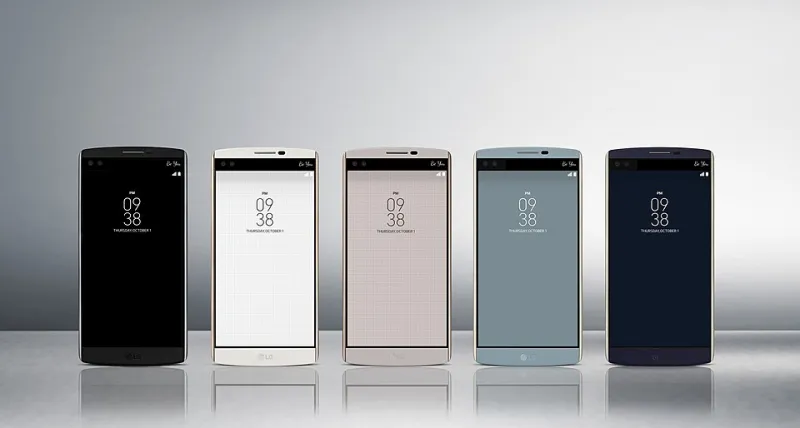
Photo: LG Electronics, CC BY 2.0, via Wikimedia Commons
There is a particular irony embedded in the story of modern sound virality. The tones that stop thumbs mid-scroll, that get looped into trending audio clips, that accumulate millions of uses on short-form video platforms — many of them were never designed for an audience at all. They were utility sounds. Functional artifacts. The sonic equivalent of a sticky note.
And yet, somewhere between the sound designer's DAW and a teenager's For You Page, something extraordinary happened.
The Anatomy of an Accidental Hit
Consider the trajectory of what the sound design community informally calls "the glass chime incident" — a two-second notification tone originally embedded in a boutique project management app used primarily by independent architects and interior designers. The tone, a layered combination of a struck crystal bowl and a pitch-shifted cowbell transient, was created by Brooklyn-based audio artist Mara Solis in 2021 as part of a small UI sound package.
"I made maybe twelve sounds for that project," Solis recalled in a recent conversation. "The budget was modest. The client wanted something that felt premium but not corporate. I spent the most time on that one because it had to communicate 'attention' without feeling alarming."
Solis had no idea the app's screen-recording tutorials — uploaded by power users to TikTok — would expose that tone to millions of viewers who had never heard anything quite like it. Within weeks, creators began isolating the audio, using it as a comedic punctuation mark, a dramatic reveal cue, and eventually a remix source. The sound now appears in content that has nothing to do with project management, architecture, or even productivity.
Solis found out through a text from her college roommate.
Democratization by Accident
What makes the virality of notification sounds particularly fascinating is the mechanism by which they travel. Unlike a song, which carries an artist's identity, or a film score cue, which arrives with institutional context, a notification tone is contextually naked. It means whatever the listener decides it means.
This interpretive openness is precisely what makes experimental bell tones — with their complex overtone structures and non-standard attack-decay profiles — so susceptible to recontextualization. They do not sound like anything listeners have been trained to categorize. That ambiguity is a feature, not a bug, when it comes to viral adoption.
Dr. Priya Anand, a researcher in auditory cognition at a major Midwest university, has studied the phenomenon from a cognitive standpoint. "Sounds that fall slightly outside our established mental categories command more processing attention," she explained. "An experimental tone — something with an unusual resonance pattern or an unexpected timbral quality — keeps the brain engaged in a way that a standard notification ping simply does not."
That sustained cognitive engagement, she suggests, is part of why these tones embed themselves so efficiently in memory and, by extension, why creators gravitate toward them when building content.
The Shift Toward Intentional Virality
The accidental nature of early notification-tone virality has not gone unnoticed by the broader creative industry. A growing cohort of sound designers is now approaching their work with what some are calling a "shareability architecture" — a deliberate framework for crafting tones that are structurally primed for social platform adoption.
This does not mean dumbing sounds down. If anything, the opposite is true. Designers working in this space are leaning harder into experimental techniques: spectral processing, unusual tuning systems, hybrid acoustic-electronic layering. The goal is to produce sounds that are simultaneously arresting and malleable — distinctive enough to be recognizable, open enough to invite remix.
Los Angeles-based sound artist and UI designer Jerome Whitfield has been working with this philosophy explicitly for the past two years. "I think about the sound in three layers," he said. "There's the immediate hook — what makes someone stop. There's the texture layer — what rewards repeated listening. And then there's what I call the 'gap layer' — the sonic space that a remixer or a meme creator can walk into and make their own."
Whitfield's approach has attracted attention from tech startups and consumer brands alike, many of whom are beginning to understand that their notification sounds are not just functional signals — they are potential cultural artifacts.
Platform Ecosystems and the New Sound Economy
TikTok's audio infrastructure has fundamentally altered the economics of incidental sound. When a tone is used in a video that gains traction, the platform's algorithm surfaces that audio to other creators, creating a compounding loop of adoption. Unlike music, which is subject to licensing frameworks and copyright enforcement, many notification tones exist in a murky IP landscape — a reality that has both disadvantaged original creators and accelerated the spread of their work.
Solis, for her part, has mixed feelings. "I didn't make any money from the virality. The client owned the work. But I got inquiries I wouldn't have gotten otherwise. It opened doors."
For the field of experimental sound design more broadly, this dynamic represents a genuine cultural opening. Sounds that might have lived exclusively in the portfolios of working audio professionals are now circulating in the cultural bloodstream, training new ears to appreciate complexity and rewarding designers who are willing to take risks.
The doorbell has always announced an arrival. What is new is that the announcement itself has become the destination.
What Comes Next
As brands and platforms grow more sophisticated in their understanding of audio identity, the accidental era of notification-tone virality may be drawing to a close — replaced by something more deliberate, more strategic, and arguably more interesting. The experimental sound design community is being invited, perhaps for the first time at scale, to bring its full creative vocabulary to bear on sounds that billions of people will hear every day.
The challenge, as always, is preserving the quality that made those accidental anthems worth hearing in the first place: the sense that something genuinely unexpected is happening, that the sound was made by a curious mind rather than optimized by a committee.
In a media environment defined by algorithmic predictability, that quality remains stubbornly, beautifully difficult to manufacture.