Cast in Ohio, Heard Everywhere: Five American Foundries Feeding the Experimental Sound Boom
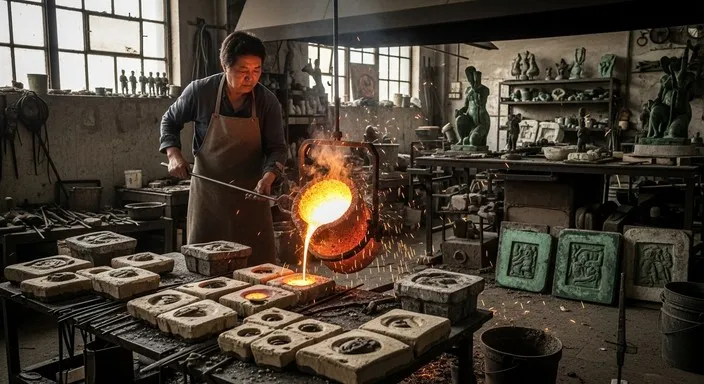
Photo: bell foundry molten bronze casting workshop craftsman, via images.stockcake.com
The experimental bell tone may live in a laptop, but it is born in fire. Across the American interior, a handful of small foundries — most of them family operations older than the recording industry — continue casting bells using techniques largely unchanged for a century. Sound designers, increasingly hungry for acoustic material no synthesizer can fake, have started making the pilgrimage. What follows is a route through five of them.
1. The Ohio Bronze House
Tucked outside Marietta, this third-generation operation has cast church and schoolhouse bells since the 1920s. Its bells are known for a warm midrange and a long, even decay — a product of the shop's slow-cooled, high-tin bronze. In the last three years, the owner estimates a quarter of his orders have come from studios and game developers rather than congregations. Field recordists favor the loading dock, where the brick walls produce a natural reverb tail that samples beautifully.
2. The Pennsylvania Hand-Bell Workshop
A one-room shop in Lancaster County turning out hand bells for choirs across the country. Each bell is tuned by ear, by a tuner who learned the trade from his father. The acoustic signature here is precise: hand bells are tuned to specific partials, which makes them ideal reference material for designers studying how overtone series shape perceived pitch. Several university music-technology programs, including one in Philadelphia, buy sets specifically for acoustics research.
3. The Texas Ranch Bell Smithy
West of Fort Worth, a smith forges steel dinner and ranch bells from cut and folded plate. The sound is nothing like bronze — shorter, brighter, with a slight metallic rasp that reads as 'American frontier' to audiences instantly. Trailer composers have made these bells a staple for westerns and Americana scores, and the smith now licenses his strike recordings alongside the physical product.
4. The Michigan Ship's Bell Foundry
On the Great Lakes, a small shop recasts and restores ship's bells for working vessels and museums. Salt-corroded originals are melted down and recast, and the resulting bells carry a slightly irregular harmonic structure — a flaw, by traditional standards, that experimental producers prize. The shop's archive of recordings, spanning bells from decommissioned lake freighters, has become a quietly traded resource in the sound design community.
5. The Oregon Coastal Casting Studio
The youngest entry, founded barely fifteen years ago by a former sculptor, casts art bells for public installations along the Pacific coast. Because the shop works with architects, its bells are tuned to specific environments — a bell for a fog-swept headland is voiced differently than one for a city plaza. That site-specific thinking has made it a favorite collaborator for interactive sound artists designing location-based audio experiences.
Why the Old Ways Matter to the New Sound
The throughline in all five shops is tolerance for imperfection. Sand seams, hand tuning, alloy variance — the things mass production eliminates are precisely the irregularities that make a bell sample feel alive. As one Ohio caster put it, 'A machine makes the same bell every time. A bell should be like a person. No two the same.'
The next time a bell tone stops you mid-scroll, there is a reasonable chance it began in a small-town furnace, poured by someone who has never opened a DAW. The foundries, for their part, seem content with the arrangement. The orders keep coming, and the sound keeps traveling.