Trained to Tremble: How Notification Culture Rewired the Body's Relationship with Silence
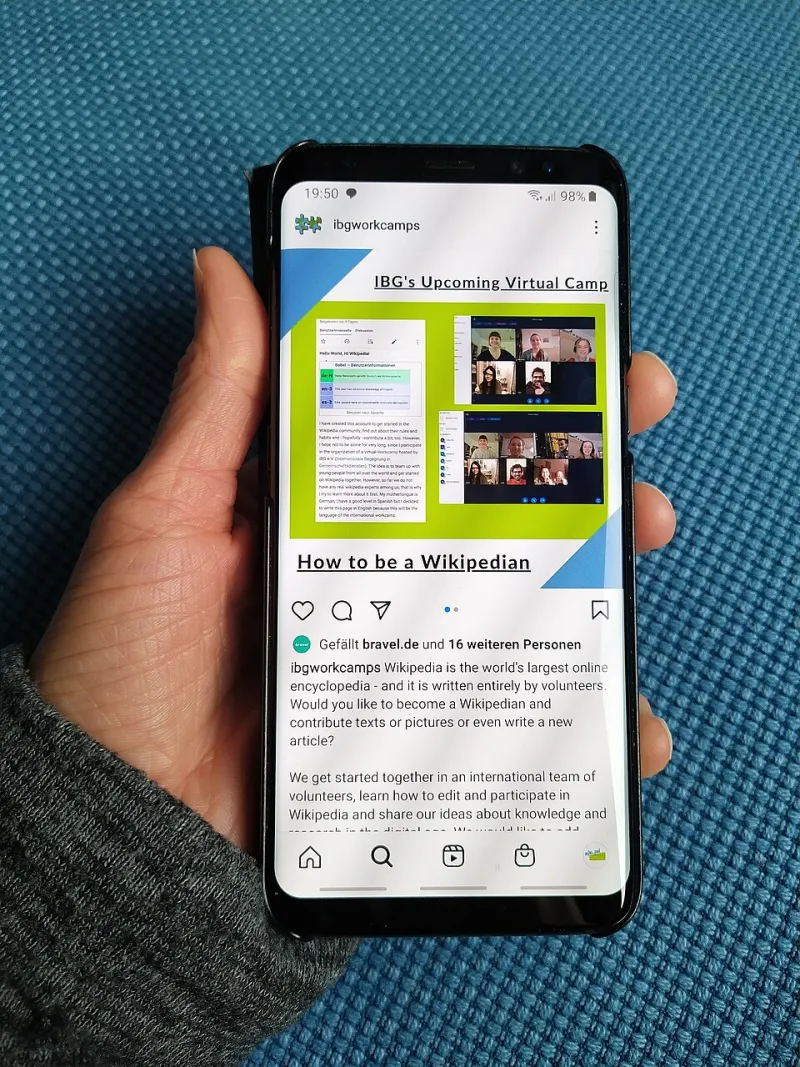
Photo: Mictlancihuatl, CC BY-SA 4.0, via Wikimedia Commons
Somewhere between the third and fourth hour of a long workday, it happens. A faint buzzing sensation against the thigh. A momentary certainty that a message has arrived. The hand reaches toward the pocket—and finds nothing. The phone is silent. It was always silent. The sensation existed entirely inside the body itself.
This is phantom vibration syndrome, and researchers estimate that somewhere between 68 and 89 percent of smartphone users in the United States have experienced it at least once. For many, it occurs daily. For a growing subset, it occurs with a frequency and intensity that borders on distressing. What began as a peculiar footnote in early mobile technology research has evolved into a subject of serious neurological inquiry—and, perhaps unexpectedly, a source of profound creative inspiration for experimental sound designers working at the edges of auditory art.
The Nervous System as Conditioned Instrument
To understand phantom vibration syndrome, it helps to understand the mechanism that produces it. Dr. Michelle Drouin, a researcher at Indiana University–Purdue University Fort Wayne who has published extensively on the subject, describes the phenomenon as a product of learned neural pathways. The brain, having repeatedly associated a specific tactile stimulus—the vibration of an incoming notification—with the need for immediate attention, begins to anticipate that stimulus. Over time, it does not simply wait for the signal. It manufactures one.
"What we're really talking about is hypervigilance encoded at a physiological level," explains one neuroscientist specializing in sensory processing disorders, speaking with Dzwonki Tones. "The nervous system has been trained, through thousands of repetitions, to treat the absence of a notification as a state of incompleteness. The phantom sensation is the body's attempt to resolve that incompleteness on its own terms."
This framing—absence as a form of physiological tension—is precisely what has captured the attention of sound artists working in the experimental space. If the body has learned to fear quiet, then silence is no longer neutral. It is, in a very real sense, an active stimulus. And that changes everything about how sound can be designed and deployed.
What Sound Designers Are Hearing in the Data
For Brooklyn-based audio artist and composer Nadia Voss, the research on phantom vibration syndrome arrived at a pivotal moment in her practice. She had been working on a series of long-form compositions exploring what she calls "anticipatory texture"—sonic environments constructed around the shapes of sounds that haven't yet arrived. When she encountered the neuroscience literature, she recognized something she had been intuiting for years.
"There's a grammar to notification tones that we've all internalized without realizing it," Voss says. "The attack, the brief sustain, the decay—that particular envelope is now so deeply associated with urgency and response that you can trigger the conditioned reaction without playing the tone at all. You just have to suggest its absence convincingly enough."
Voss's recent work has moved toward what she and a small cohort of collaborators have begun calling "anti-tones"—compositions designed not to deliver a sonic event, but to inhabit the space where one is expected. These pieces use psychoacoustic techniques to construct the perceptual foreground of an impending notification, then withhold the resolution. The effect, she reports, is deeply unsettling for some listeners and profoundly liberating for others.
"Some people feel a kind of release," she notes. "Like the body finally gets permission to stop waiting. Others find it genuinely anxiety-inducing. Both reactions tell us something important about how conditioned we've become."
Designing Against the Reflex
The therapeutic implications of this work have not gone unnoticed. A number of wellness technology developers in the US have begun consulting with experimental audio artists to design what might be described as deconditioning soundscapes—audio environments intended to gradually loosen the grip of notification-response conditioning on the nervous system.
The approach draws loosely from established principles in exposure therapy and sensory desensitization, but applies them through the medium of intentionally crafted sound. Rather than eliminating tones entirely, these compositions reintroduce bell-derived and synthetic notification-adjacent sounds in contexts stripped of urgency—long, unhurried decays, tones embedded deep within ambient textures, familiar frequencies presented at tempos too slow for the brain to interpret as alerts.
"We're essentially trying to teach the nervous system that a bell can just be a bell again," says one audio consultant working with a mindfulness technology startup based in San Francisco. "Not a command. Not a demand. Just a sound that exists in time and then ends."
This is, in many ways, a return to something ancient. Bell tones have served contemplative and ceremonial functions across cultures for millennia, precisely because of their capacity to mark time without dictating response. The challenge facing contemporary sound designers is not inventing a new relationship between human beings and bell-derived frequencies—it is recovering one that has been substantially overwritten by decades of notification culture.
The Anti-Tone as Artistic Statement
Beyond wellness applications, the anti-tone concept has begun attracting attention as a legitimate aesthetic form in its own right. Several experimental music festivals across the United States have programmed performances built around designed absence, and the critical reception has been notably serious. Audiences accustomed to immersive sound installations are finding that works structured around withheld sonic events produce a distinctive form of engagement—one that is less about listening and more about the act of waiting itself.
There is something quietly radical about this. In a media environment defined by relentless stimulation, a work that derives its power from not delivering is making an implicit argument about attention, agency, and the costs of perpetual availability. The phantom vibration, in this reading, is not merely a neurological curiosity. It is a symptom of a broader cultural condition—and the artists responding to it are doing so with the tools of their trade: carefully, precisely, and with a deep respect for the power of what is not said.
"Sound is always in conversation with silence," Voss reflects. "But we've spent so long training people to treat silence as a malfunction that we've forgotten how to use it. The phantom vibration tells us the body remembers what the culture has tried to forget. That feels like important information."
For sound designers, neuroscientists, and creative professionals working at the intersection of human perception and auditory art, that information is proving to be among the most generative material of the current moment. The body, it turns out, has been keeping meticulous records—and it is only now beginning to speak.