After the City Sleeps: Inside America's Nocturnal Sound Labs Where Bell Tones Are Born at 4AM
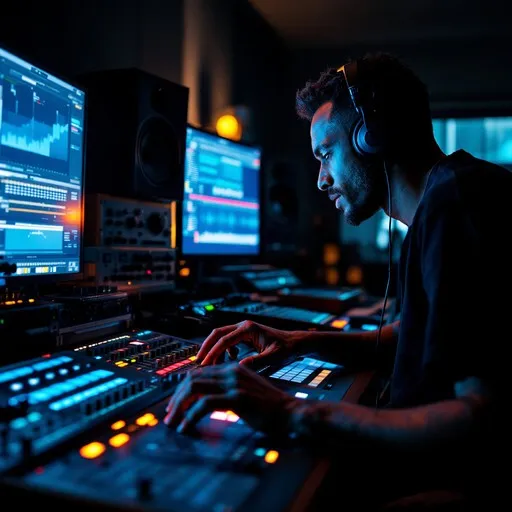
Photo: music producer working alone in dark recording studio at night, via images.stockcake.com
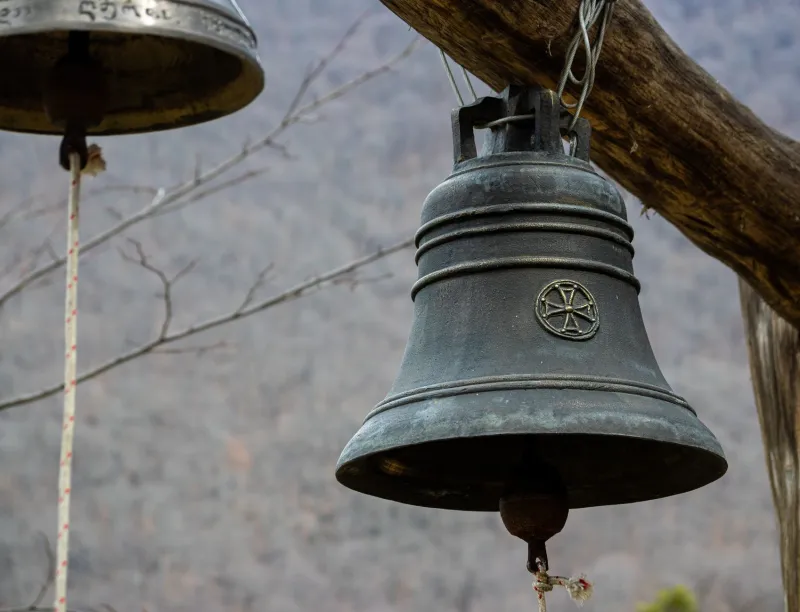
The first thing you notice at 3:47 AM in a Brooklyn basement studio is the room itself. Without the subway rumble, the delivery trucks, the neighbor's television bleeding through the wall, the space opens up. A struck metal rod that would vanish into daytime noise now hangs in the air for six, seven full seconds. For the producers who keep these hours, that suspended decay is not a curiosity. It is the raw material of their entire practice.
The Quiet Advantage
Ambient noise floor matters more than most daytime producers admit. Urban environments in the United States routinely sit between 55 and 70 decibels around the clock, and even a treated studio carries that psychological residue. After midnight, the floor drops. Monitoring becomes honest. A bell tone's tail — the part that carries its character — stops competing with the world.
Circadian research offers a partial explanation for why the work improves. Studies on creative problem-solving suggest that at off-peak hours of alertness, the brain tolerates more remote associations and looser logic. For sound designers hunting for a tone that feels unfamiliar without feeling wrong, that softened critical filter can be the difference between a preset and a discovery.
Portraits from the Night Shift
In Detroit, a producer who releases under the name Vellum tests her bell patches through a 1960s church bell recording chain — a vintage ribbon microphone into a tape deck — only between 2 and 5 AM. 'Daytime, I mix like an engineer,' she says. 'At night, I listen like a listener. The tone tells me when it's finished, not the other way around.'
Outside Austin, a former aerospace technician turned synthesis obsessive runs his bell-oscillator experiments in a detached garage, timed to the lull after the last flights out of Austin-Bergstrom. His best-known tone, licensed to a meditation app with two million users, was reportedly take number one, recorded in a single insomniac session.
And in rural Vermont, a two-person team samples physical bells — salvaged schoolhouse bells, dinner bells, ship's bells — during winter nights, when the cold air and frozen ground dampen the low-frequency wash that contaminates field recordings. Their sample library, built almost entirely between November and March, is now used in film trailers across Hollywood.
What the Dark Changes About the Sound Itself
Night work does not merely make producers more imaginative. It changes the tones. Isolation encourages longer decays, since there is no pressure to move on. The absence of ambient masking pushes designers toward lower volumes and finer gradations of attack. And the emotional register of small hours — that particular American 4 AM loneliness — leaks into the work whether the artist intends it or not.
Several producers describe a shared ritual: recording the same test strike at noon and again at night, then A/B comparing. Nearly all report preferring the nocturnal version, even when the waveforms are technically identical. Perception, it turns out, is part of the instrument.
Toward a Night-Shift Canon
There is no union for these hours, no credit roll for the 4 AM session. But the fingerprints are everywhere in contemporary experimental audio: the long-sustaining bell tones in ambient playlists, the patient, almost meditative notification designs now favored by wellness brands, the growing appetite for textures that only reveal themselves in quiet rooms and quiet hours.
If the last decade of sound design belonged to the loud and the immediate, the next one may belong to those who waited for everyone else to go to bed. The city sleeps. The bell rings anyway.