The Loudest Statement Is Nothing: How Sound Artists Are Weaponizing Silence Against Notification Culture
There is a particular irony in the fact that the professionals most intimately acquainted with the architecture of tones — the sound designers, experimental composers, and audio artists who spend their careers engineering the precise emotional weight of a single frequency — are increasingly the ones choosing to hear none of them. Not as an act of burnout or retreat, but as a deliberate, even philosophical, declaration. Silence, for this cohort, is not the absence of a statement. It is the statement.
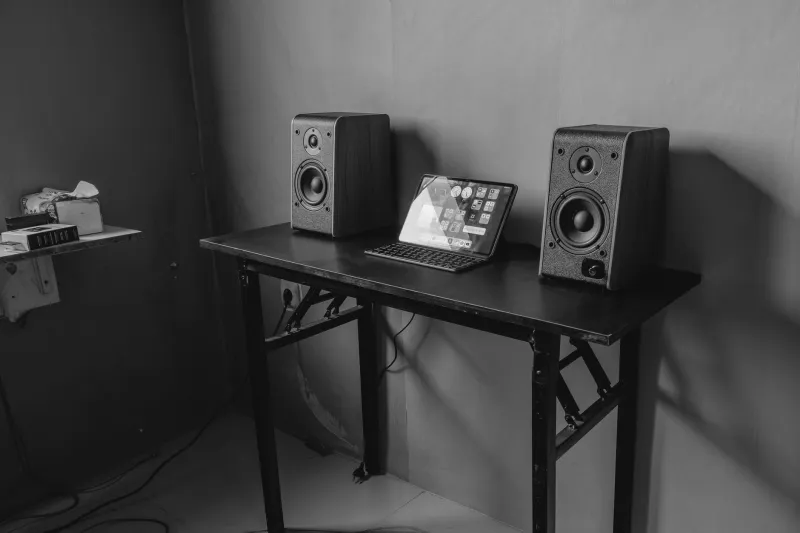
This is not a fringe phenomenon. Across studios in Brooklyn, Portland, and Los Angeles, a discernible pattern has emerged: practitioners at the leading edge of experimental audio are systematically removing notification sounds from their workflows, disabling alerts on every device, and in some cases going further — engineering their physical studio environments to absorb rather than reflect ambient sonic intrusion. The practice has acquired its own informal vocabulary. Some call it "tonal abstinence." Others prefer "alert fasting." A few simply describe it as the only honest response to a culture that has mistaken interruption for communication.
The Notification as Compositional Contamination
To understand why this movement carries genuine weight, it helps to understand how deeply notification sounds have colonized the creative process. For experimental audio artists, the problem is not merely one of distraction — though distraction is real and well-documented. The deeper issue is compositional contamination. Every tone that enters the ear, however briefly, leaves a residue. It primes the auditory cortex, nudges expectation, and subtly reorients the internal sonic landscape the artist is trying to cultivate.
Consider the challenge facing a composer working with bell-adjacent timbres — the resonant, metallic frequencies that sit at the heart of so much experimental sound design. When a smartphone notification fires a sharp, mid-range chime into that working environment, it does not simply interrupt. It inserts a reference point. The artist's ear, trained to parse micro-distinctions in overtone structure and decay, registers the intruder with a precision that an untrained listener would not. The contamination is not metaphorical. It is acoustic.
This is why the silence-as-rebellion movement is not, at its root, about productivity. It is about perceptual sovereignty — the right to control what enters one's sonic field during the act of creation.
Attention Design Turned Against Itself
The broader cultural backdrop matters here. The past decade has produced a substantial literature on attention design: the deliberate engineering of digital interfaces to maximize engagement, capture focus, and trigger habitual checking behaviors. Notification sounds are among the most refined instruments in this arsenal. Their tonal qualities — typically bright, brief, and pitched to cut through ambient noise — are not accidental. They are the product of iterative testing against human auditory psychology.
Experimental sound artists occupy an unusual position relative to this system. Many of them understand, at a technical level, precisely how these tones work and why they are effective. They can identify the frequency bands that trigger alertness, the decay curves that suggest urgency, the harmonic relationships that produce a sense of unresolved expectation. And it is exactly this knowledge that makes the tones so intolerable to them. Knowing the mechanism does not neutralize its effect. If anything, it amplifies the sense of manipulation.
For these practitioners, disabling notifications is not a lifestyle hack borrowed from a productivity blog. It is a refusal to be operated. It is, in the vocabulary of their discipline, a compositional choice about what sounds are permitted to exist in a given space and time.
Silence as Raw Material
What distinguishes the most thoughtful participants in this movement from simple tech skeptics is what they do with the quiet they reclaim. Silence, in the experimental audio tradition, has never been understood as emptiness. The influence of John Cage casts a long shadow here — his foundational argument that there is no such thing as true silence, only sounds we have not yet attended to, remains a live proposition in contemporary sound design circles.
For practitioners actively choosing to remove notification culture from their environments, this means that the quiet they create is not a void. It is a canvas populated by everything that was previously masked: the low-frequency hum of building infrastructure, the irregular percussion of street traffic filtered through acoustic insulation, the subtle room tone that shifts with temperature and humidity. These are the sounds that notification culture drowns out, and they are, to the experimental ear, extraordinarily rich.
Several artists working in this space have begun incorporating "reclaimed silence" as an explicit element in their compositions — field recordings made in notification-free environments, processed and layered to highlight the textures that constant digital interruption had rendered inaudible. The results tend toward the immersive and the uncanny: soundscapes that feel simultaneously familiar and profoundly strange, because they are built from the acoustic reality of everyday American spaces as those spaces actually sound when no one is performing busyness at them.
The Productivity Culture Provocation
It would be naive to discuss this movement without acknowledging its implicit critique of American productivity culture. The notification sound is, among other things, a symbol of availability — a signal that one is connected, responsive, and participating in the perpetual exchange of information that professional life increasingly demands. To silence it entirely is to opt out of that performance, and in many professional contexts, opting out carries real social and economic risk.
Experimental artists occupy a somewhat privileged position here: their work is, by definition, resistant to easy metrics of productivity, and their professional communities tend to value unconventional working practices. But the argument they are making — that constant sonic interruption degrades not just concentration but the quality of perception itself — has implications that extend well beyond studio culture.
If the people most skilled at listening are telling us that the soundscape of modern digital life is hostile to deep auditory attention, that is worth taking seriously. It suggests that notification design, for all its sophistication, may have optimized for the wrong outcomes: maximizing engagement at the cost of the very perceptual capacity that makes meaningful engagement possible.
The Bell That Doesn't Ring
There is something almost paradoxical about a platform devoted to the art and science of tones giving sustained attention to the case for their elimination. But the paradox is only apparent. The experimental sound community's engagement with silence is not a rejection of sonic art — it is an extension of it. The bell that does not ring is still a bell. Its absence is shaped by everything that surrounds it, and in the hands of a skilled practitioner, that absence can carry as much weight as any struck frequency.
The movement toward deliberate, principled silence in creative workflows is, at its core, an argument about the conditions under which sound becomes meaningful. Tones that arrive constantly, without invitation, at the behest of algorithmic systems designed to capture attention, are not meaningless — but their meaning is someone else's, serving someone else's purposes. The silence that experimental artists are choosing is not a retreat from meaning. It is a reassertion of authorship over the sonic environment — a declaration that the next sound to enter this space will be one that was chosen, not delivered.