The Crowded Quiet: How Experimental Artists Are Reclaiming Silence in an Era of Sonic Saturation
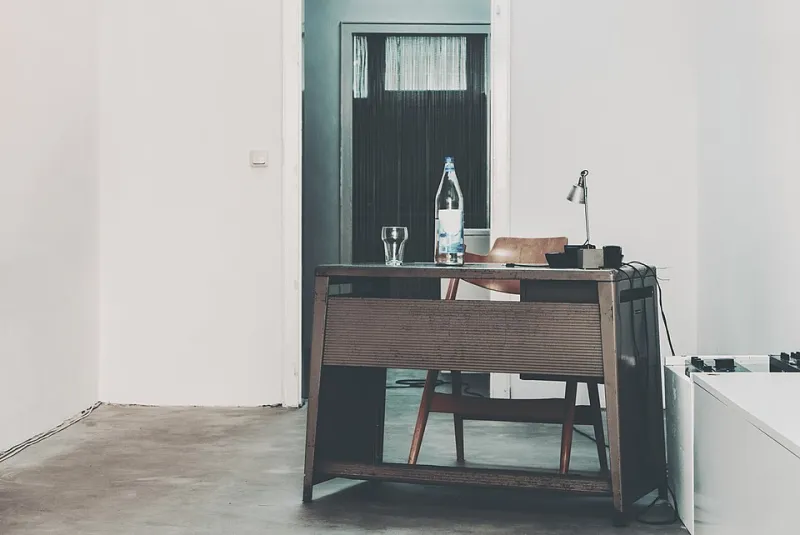
Photo: Daniel von Appen daniel_von_appen, CC0, via Wikimedia Commons
Somewhere between the third notification tone of the morning and the ambient soundtrack automatically selected by a coffee shop's playlist algorithm, something shifts. The individual sounds are, in isolation, innocuous — a soft chime here, a low drone there, a notification designed by a behavioral psychologist to feel just urgent enough to demand attention. But accumulated across a full waking day, they form something closer to a continuous acoustic pressure: an environment in which genuine silence has become not a natural condition but an increasingly rare luxury.
This is the sonic landscape that a growing cohort of experimental sound artists, acoustic designers, and cultural critics has begun to treat as a crisis — and a creative opportunity.
The Arithmetic of Acoustic Colonization
The numbers are instructive, even if they resist precise measurement. The average American adult now spends more than eleven hours per day engaged with some form of media, according to Nielsen data, and the vast majority of that media carries a sonic component. Smartphones alone generate an estimated 80 to 150 distinct audio alerts per day for a typical user, a figure that excludes background music, podcast playback, and the ambient soundscapes increasingly deployed by retail environments, fitness studios, and corporate offices to manage mood and behavior.
Beyond the personal device, the acoustic environment of American public life has been systematically filled. Airports, transit systems, and commercial spaces have adopted sophisticated sound design strategies — often drawing on the same experimental audio principles that once belonged exclusively to art installations — to guide behavior, reduce perceived wait times, and reinforce brand identity. The result is an environment in which almost no public space is acoustically neutral.
"We've essentially agreed, as a culture, to never be in silence," says acoustic designer and sound artist Jerome Calloway, whose work has been exhibited at institutions across the country and whose recent practice has shifted explicitly toward what he calls "the design of absence." "And we've done it so gradually that most people don't register it as a choice. It just feels like the world."
The Notification Tone as Cultural Symptom
Of all the sounds that constitute modern sonic saturation, the notification tone occupies a particular position in the cultural imagination. Originally engineered for pure functionality — an auditory signal that a message had arrived — the notification tone has evolved into a sophisticated instrument of behavioral conditioning. The characteristic tones of major platforms are now designed by teams of psychoacousticians and user experience researchers whose explicit goal is to produce sounds that are impossible to ignore without being consciously perceived as intrusive.
This is, from a purely technical standpoint, an impressive achievement. From a cultural standpoint, it represents something more troubling: the wholesale privatization of the human auditory environment for commercial purposes, executed at a scale and with a precision that earlier generations of acoustic engineers could not have imagined.
The irony noted by several artists working in this space is that the tools of experimental sound design — the same understanding of psychoacoustics, resonant frequencies, and perceptual thresholds that underlies the work of bell tone artists and audio experimentalists — have been among the primary instruments of this colonization. "The techniques we use to create genuinely moving, expansive sonic experiences are the same techniques that are being used to make sure you can't ignore your phone," observes sound artist and composer Lydia Marsh, who is based in Portland, Oregon. "That's not a coincidence. It's a question of whose interests the technique serves."
Silence as Resistance, Silence as Practice
The counter-movement has taken several distinct forms, and they do not always resemble one another. At the most institutionally visible end, there are the acoustic installation artists who have spent the past decade creating physical spaces explicitly engineered for the experience of silence. These works — found in galleries, parks, and occasionally in corporate wellness programs — typically use a combination of acoustic dampening materials, carefully calibrated ambient tones, and architectural design to produce environments in which the ordinary background noise of contemporary life is either eliminated or reduced to a level at which it registers as absence rather than presence.
Calloway's most recent installation, mounted in a former industrial space in Detroit, used a series of slowly decaying bell tones — each separated by intervals of genuine, recorded silence — to train listeners' attention on the space between sounds. "The tones aren't the piece," he says. "They're the frame. What I'm asking people to hear is everything that isn't there."
At the consumer end of the spectrum, a small but growing category of apps and digital products has emerged to address the demand for what their developers describe, with varying degrees of commercial frankness, as "sonic detox." These products range from simple white-noise generators to sophisticated adaptive soundscapes that use AI to identify and counteract the specific acoustic profiles of a user's environment. Several have attracted significant venture funding, suggesting that the market for intentional quiet has reached a scale that commands serious commercial attention.
"Silence has become a premium product," says Marsh, with a note of ambivalence. "Which is both a sign that people genuinely want it and a sign of how thoroughly we've accepted the idea that natural quiet is something you have to purchase access to."
Brands That Sell the Off Switch
The luxury sector, characteristically alert to the cultural valuation of scarcity, has arrived at similar conclusions. A handful of high-end hospitality brands have begun marketing acoustic environments — rooms and spaces engineered to specific decibel levels, with carefully controlled sonic profiles — as premium amenities. One boutique hotel group operating in New York and San Francisco now offers what it describes as "acoustic suites," rooms in which all notification-generating devices are checked at the door and the ambient sound environment is maintained at levels that the brand's materials describe, with some precision, as approximating the acoustic conditions of a pre-industrial rural landscape.
The proposition is straightforward, if somewhat disquieting in its implications: genuine quiet now costs extra.
For the experimental artists who have been working in this space for years, often without commercial backing or institutional support, the mainstreaming of intentional silence presents a complicated set of feelings. The cultural acknowledgment that sonic saturation is a problem worth addressing is welcome. The transformation of that acknowledgment into a luxury product — accessible primarily to those with the resources to purchase it — is, for many of them, precisely the wrong response.
"What we need isn't premium silence," says Calloway. "We need to collectively decide that some spaces, some hours, some frequencies of our shared life belong to everyone — and that they're allowed to be empty. That's not a product. That's a political choice."
The bell, in this framing, is not merely a sound. It is a marker — a boundary between the noise that fills modern life and the space that remains when it recedes. The experimental artists working at this boundary are not simply making aesthetic statements. They are, in the most literal sense, fighting for the right to hear nothing at all.