Seeing Is Unbelieving: Why Sound Artists Are Abandoning the Visual Crutch
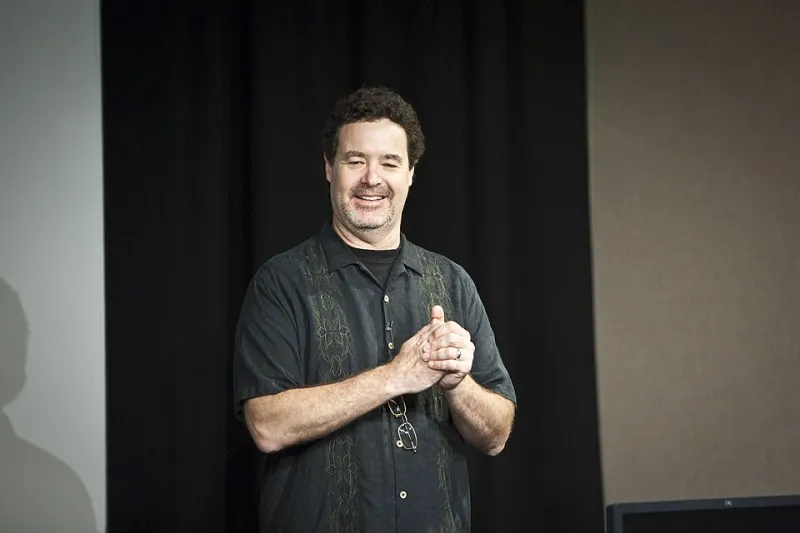
Photo: Vancouver Film School, CC BY 2.0, via Wikimedia Commons
There is a particular kind of flattery embedded in the spectrogram. It tells the sound designer that their work is complex enough to be mapped, intricate enough to be rendered as a cascade of color and frequency — something worth looking at. For nearly two decades, that flattery has shaped how experimental audio is conceived, marketed, and consumed in the United States and beyond. The visualization of sound became not merely a tool but a philosophy, an implicit argument that audio only fully exists once it can be seen.
A number of prominent sound artists are now calling that philosophy what it is: a trap.
The Visual Turn and Its Discontents
The roots of this shift run deep into the early 2000s, when music visualization software moved from niche academic labs into consumer media players and, eventually, into the design suites of every major studio. Platforms like Winamp's Milkdrop visualizer were novelties at first. But as digital audio workstations matured and reactive visual tools became standard features, the practice of pairing sound with its visual counterpart evolved from an accessory into an expectation.
By the 2010s, the synesthetic design framework — the deliberate construction of audio-visual pairings intended to simulate cross-sensory experience — had become something close to doctrine in experimental sound circles. Brand audio identities were pitched to clients with accompanying motion graphics. Ambient music releases arrived with generative visual companions. Even live performance increasingly required a visual layer to be taken seriously on festival stages from Coachella to Brooklyn's output.
The problem, as several practitioners now articulate it, is that the visual layer did not merely accompany the sound. It began to determine it.
"When you know your work is going to be visualized, you start composing for the visualizer," says one Brooklyn-based sound designer who has worked extensively in both experimental music and brand identity. "You make choices — tonal choices, textural choices — that will read well on screen. You are no longer making sound. You are making a soundtrack to an image that doesn't exist yet."
Abstraction as Resistance
The rejection of visual translation is, at its core, a political act within the creative community. It asserts that sound is a complete and sovereign medium — one that neither requires nor benefits from the legitimizing authority of the image.
This position is not new in the history of audio art. Figures like Pauline Oliveros, whose deep listening practice demanded that audiences engage with sound on purely sonic terms, and the early tape music composers of the Columbia-Princeton Electronic Music Center were equally insistent on audio's independence. What is new is the cultural context in which this argument is being revived: a landscape so saturated with visual content that choosing to withhold the image has become a genuinely disruptive gesture.
Several experimental artists working today describe their deliberate move away from visual accompaniment as a kind of subtraction — removing the scaffolding to see whether the structure holds. For those working with bell tones and resonant frequencies in particular, this stripping-away has produced unexpected results. Without a visual frame to anchor the listener's interpretation, the ambiguity inherent in a sustained bell tone becomes the work itself. The listener is left with nothing to look at and everything to hear.
The Spectrogram Problem
The spectrogram deserves particular scrutiny in this conversation. As a diagnostic and compositional tool, it is genuinely useful — a means of examining the harmonic content of a sound with precision. But its migration from the back end of the production process to the front end of creative communication has had consequences that are only now being fully reckoned with.
When a spectrogram becomes the primary way a sound work is represented to an audience — as cover art, as promotional material, as the visual identity of an album or installation — it imposes a specific interpretive framework. It tells the listener to think of sound as data. It privileges the measurable over the experienced, the visible over the felt.
For experimental sound designers working in the space of pure tonal abstraction, this is precisely the wrong frame. The bell, as a sonic object, is interesting not because of what its spectrogram reveals but because of what the spectrogram cannot capture: the way a particular overtone series interacts with a specific room, the micro-variations in decay that change character depending on the listener's physical position, the psychological weight that silence carries in the moments after the tone has faded.
None of that appears on a spectrogram. None of it should.
What Pure Sonic Abstraction Actually Sounds Like
The practical question, of course, is what this rejection of visual translation produces in practice. The answer is less uniform than a manifesto might suggest.
Some artists working in this space are returning to long-form, unaccompanied listening experiences — works designed for headphone consumption in complete darkness, or for installation in spaces where visual distraction is architecturally eliminated. Others are exploring the relationship between sound and bodily sensation more directly, using low-frequency resonance and spatial audio techniques to create works that are experienced as much through the body as through the ears.
What these approaches share is a deliberate refusal of the visual shortcut. They demand something of the listener that contemporary media culture rarely asks: sustained attention without reward, engagement without explanation, presence without image.
For creative professionals accustomed to working in environments where every sonic choice is immediately rendered visible — where the waveform is always on screen, where the spectrogram is always running — this demand can feel genuinely disorienting. That disorientation, several practitioners suggest, is the point.
The Creative Case for Opacity
There is a broader argument embedded in this movement that extends well beyond the experimental audio community. In a cultural moment defined by radical transparency — by the expectation that every process can be visualized, every dataset rendered accessible, every experience documented — the choice to remain opaque is itself a form of creative statement.
Sound, uniquely among artistic media, retains the capacity for a kind of opacity that resists commodification. An image can be screenshot. A text can be copied. But a sound experience — particularly one that is spatial, ephemeral, and deliberately unaccompanied by visual material — exists in a register that is difficult to reduce, difficult to share, and difficult to own.
For experimental sound designers who have watched their work flattened and circulated as content, that opacity has begun to look less like a limitation and more like a last refuge.
The visualizers will continue to run. The spectrograms will continue to glow. But somewhere in the gap between the image and the tone, a quieter and more demanding conversation is taking place — one conducted entirely in sound, for those willing to simply close their eyes and listen.