Almost Real, Deeply Wrong: How Bell Tones Navigate the Edge of Human Dread
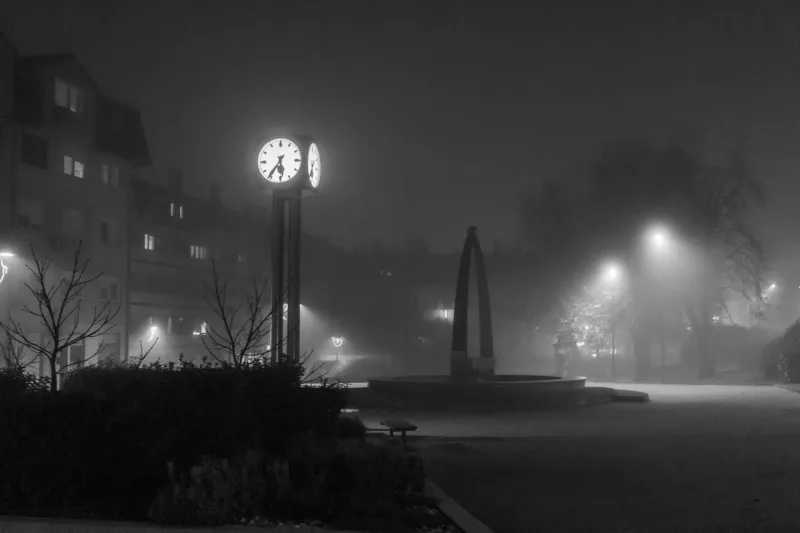
There is a moment — brief, involuntary, impossible to fully articulate — when a bell tone crosses a line. It does not sound broken. It does not sound cheap or obviously synthesized. It sounds almost correct, which is precisely why it makes the body recoil. This is the sonic uncanny valley: a perceptual no-man's-land where familiarity and wrongness converge, producing an anxiety more visceral than any overtly artificial sound could manufacture.
For decades, the uncanny valley was the exclusive vocabulary of robotics and CGI — the unsettling effect produced by humanoid figures that are convincing but not convincing enough. What sound researchers and experimental designers have quietly demonstrated, however, is that the phenomenon operates with equal force in the auditory domain. And among all the sounds the human ear has catalogued across centuries of cultural conditioning, few are more susceptible to this effect than the bell.
The Frequency of Fear
To understand why certain bell tones trigger primal unease, it is necessary to understand what the human auditory system expects from a bell in the first place. A natural, physically struck bell produces a complex signature: a sharp transient attack, a cascade of inharmonic partials, and a decay envelope that follows predictable physical laws. The brain does not consciously analyze these components, but it has internalized them through a lifetime of exposure. When any one element deviates — subtly, precisely — the brain registers the discrepancy before conscious thought catches up.
Dr. Miriam Holst, a cognitive neuroscientist whose work focuses on auditory threat detection, describes this mechanism as a form of predictive mismatch. "The auditory cortex is constantly running forward models," she explains. "When a sound is familiar enough to generate a strong prediction but then violates that prediction in an unexpected way, the brain flags it as potentially significant. In evolutionary terms, that flag is tied to threat assessment. The result is an autonomic stress response — elevated heart rate, heightened alertness — before the listener has any conscious explanation for why they feel uneasy."
The specific frequency ranges most implicated in this response tend to cluster around the upper partials of bell sounds — the higher harmonics that contribute to what acousticians call the "shimmer" of a bell's sustain. When these partials are slightly detuned, or when their decay rates are subtly mismatched from the fundamental, the resulting sound occupies a perceptual gray zone. It is recognizably bell-like, but it behaves as no physical bell ever could.
Temporal Wrongness and the Betrayal of Decay
Harmonic content is only one axis of manipulation. Time, it turns out, is equally important. The decay envelope of a natural bell follows a specific curve — one that listeners have internalized so thoroughly that even minor deviations register as aberrant. Sound designer Marcus Velarde, whose credits include several acclaimed horror game soundtracks, has spent years studying exactly where those deviations produce the strongest responses.
"The decay is where most designers miss the opportunity," Velarde says. "Everyone focuses on the attack — making it sharper, or softer, or adding noise. But the real terror is in the tail. If you extend a bell's decay by even a few hundred milliseconds beyond what physics would allow, or if you introduce a micro-tremolo that shouldn't be there, listeners don't know what they're hearing. They just know something is wrong. And that not-knowing is the most unsettling state you can put an audience in."
This principle — that temporal violation produces anxiety independent of spectral content — has been documented in controlled listening studies, where participants consistently rate sounds with physically implausible decay characteristics as more threatening than sounds with obvious synthesis artifacts. The brain, it seems, would rather hear something unmistakably fake than something that challenges its model of physical reality.
Weaponizing the Threshold
For the creative professionals who have mapped this territory, the implications are practical and deliberate. In horror media, the sonic uncanny valley has become a design tool of considerable sophistication. Rather than relying on loud, dissonant stings — the blunt instruments of earlier genre filmmaking — contemporary sound designers are increasingly deploying near-natural bell tones that sit precisely on the edge of wrongness.
The effect is notably different from conventional horror audio. Where a jarring synthetic sound startles, an almost-correct bell tone disturbs — producing a lower-grade, more persistent anxiety that critics and audiences often describe as dread rather than fear. This distinction matters enormously to designers working in immersive formats, where sustained emotional engagement is more valuable than momentary shock.
Installation artists have pursued similar ends through different means. Several recent gallery works in New York and Los Angeles have incorporated bell-derived tones engineered to occupy the uncanny threshold, playing at volumes just above ambient awareness. Visitors frequently report discomfort without being able to identify a source — precisely the effect their creators intended. The sound is present enough to register, wrong enough to disturb, and quiet enough to deny easy identification.
The Ethics of Engineered Unease
Not everyone in the experimental audio community regards these techniques without reservation. Some practitioners raise legitimate questions about the ethics of deliberately engineering anxiety responses in audiences who have not explicitly consented to psychological manipulation. The concern is not hypothetical — research into auditory threat responses suggests that prolonged exposure to sounds that activate the brain's predictive mismatch systems can elevate baseline stress levels even after the sound has ceased.
Velarde acknowledges the tension. "There's a difference between using these tools to create a meaningful emotional experience and using them to simply make people feel bad," he says. "Context matters. Intent matters. The same frequency relationships that make a horror game terrifying could make a public space genuinely uncomfortable in ways that aren't justified by any artistic goal."
Holst frames the issue in terms of informed consent and transparency — principles that are straightforward in clinical research but considerably murkier in artistic contexts. "We don't have a settled ethical framework for this," she admits. "What we do have is a better understanding of the mechanisms, and that understanding carries some responsibility."
The Sound That Knows Too Much
What makes the sonic uncanny valley so compelling as both a scientific subject and a creative resource is its fundamental paradox: the sounds that disturb most deeply are not the most alien, but the most familiar. A pure sine wave does not unsettle. A field recording of a distant church bell does not unsettle. It is the sound that has learned almost everything about being a bell — and then gotten one crucial detail wrong — that reaches into the nervous system and pulls.
For designers, neuroscientists, and experimental artists working at this intersection, that paradox is less a problem to be solved than a territory to be inhabited. The almost-correct bell is not a failed attempt at naturalism. It is a precise instrument, calibrated to the specific frequencies of human unease. In the right hands, it is among the most powerful tools in the contemporary sound designer's repertoire — and among the most honest, in its way, about what sound has always been capable of doing to a human body that is paying attention.